Saturday, 5 December 2009

Camera Running Speeds for Miniature Shooting

When shooting a miniature, you need to increase the running speed of the camera depending on the scale of the miniature used. This is to accurately show realism in the miniature. Below is a list of scale-to-camera speeds which must be followed in order to display realism.

Miniature Scale

Camera Speed Increase Factor

Adjusted Operating Speed

½

1.4

33x/Second

¼

2

48x/Second

1/8

2.8

67x/Second

1/10

3.2

77x/second

1/12

3.5

84x/Second

1/16

4

96x/Second

1/20

4.5

108x/Second

1/24

4.9

117x/Second

1/36

6

144x/Second

1/48

7

168x/Second

1/64

8

192x/Second

1/100

10

240x/Second

Filmmakers try to stay away from miniatures smaller than 1/64 scale because of the problems with running cameras at over 200fps as they require faster motors and also the miniatures themselves will take longer to construct as a miniature that small requires lots of time to retain realistic detail.

Thursday, 3 December 2009

The Poseidon Adventure Part Two

So I've finished watching it and I have to say, for a 38 year old film it is still pretty impressive, and some of the techniques used to achieve the aerial shots of the ship and the famous capsizing scene are still used today!

For example, a 20ft long miniature version of the S.S. Queen Mary, upon which the S.S. Poseidon is based, was constructed and floated in a large water tank. The camera was then set to run faster than normal, I will have to double check what speed exactly, because when filming miniatures, the running speeds must be faster in order to achieve realism.
This 20ft miniature was lit appropriately and was shot using a crane to achieve shots from above. The miniature was also floated in front of two separate water filled dump tanks which would create the fatal tidal wave and flip over the ship.

For the ballroom scene where the ship tips over, a clever system of hydraulics was used.
This comes directly from the Director's interview I found on Disk 2 of the DVD I have.

Large sections of the ballroom set were built on a hydraulic platform which could be raised to an angle of 45degrees which would sufficiently allow the actors and props to begin sliding. Once the shots to that angle were done, the platform was lowered back to level, however the camera remained tilted at 45 degrees. They then began to raise the platform again back up to 45 degrees, thus giving the illusion of a 90 degree tilt because the camera's 45 degree angle, and the platforms 45 degree angle would make the final result look like it was at 90 degrees.

After a cut away to the now upside down miniature of the ship, we cut back to the upside down version of the ballroom set where concealed pipes were fitted so that it could be flooded later.

Fascinating stuff! And it works so well. No need for CGI here!

I will go into more detail about miniatures in the form of a report/log type thing in which I will discuss another famous 70's disaster move starring Steve McQueen, The Towering Inferno!

The Poseidon Adventure

That's right, 1972's epic disaster movie "The Poseidon Adventure" is what I will be watching tonight so I can look at how Miniatures were used to create some of the visual effects of the ship at sea and it's capsizing.
On my DVD, there is a special feature which allows for looking at 3D schematics of the ship and also details on how certain shots were made, so this is definitely being turned on when I watch it.
I'll give a detailed analysis about it after I've watched it.

Wednesday, 2 December 2009

Found two great books

I decided to get some books out of the library to help with my research and I found two pretty cool ones full of visual effect techniques.

The first book I found is "Special Effects: Wire, Tape and Rubber Band Style" by L. B. Abbot, the guy behind the effects in The Poseidon Adventure, The Towering Inferno and Fantastic Voyage.
It gives us an insight into how some of the effects were created with detailed accounts and lots of images.

The next book is "The Technique of Special Effects Cinematography" by Raymond Fielding. It gives detailed explinations into many types of special effects and the equipment and techniques that go into creating them.

I think they are going to keep me very interested in this project. I already have read up on The Towering Inferno and some of the techniques as it is one of my favorite disatser movies, along with The Poseidon Adventure.

I think I will start to watch films that are full of visual effects and then watch the making of's afterwards. Titanic will definately be one of them as I know that inside and out.

I may even have a go at Matt replacement myself.

The Zoopraxiscope!


The zoopraxiscope is a device used to display moving images.


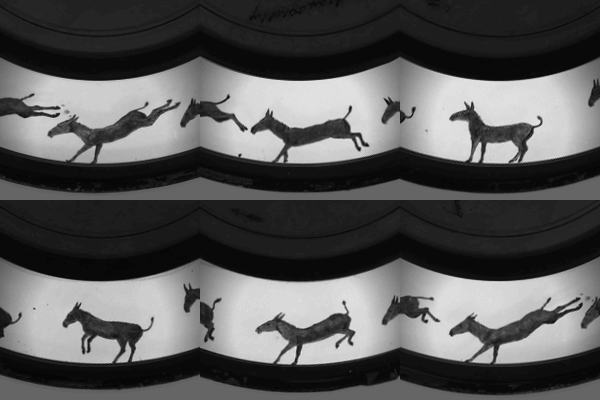
It contains a disk like this:


The disk contains still images of a subject which will make up the moving image. The idea of this is to simulate movement by spinning the disk so the images appear to move like below.


The moving image when the disk is spun.


Amazing website


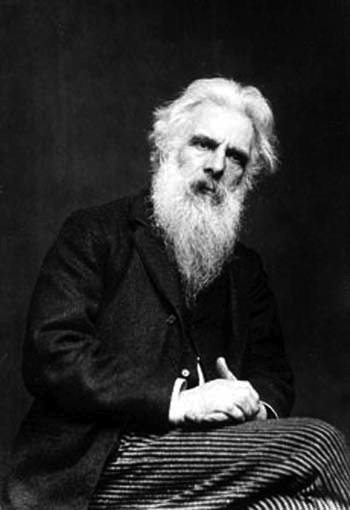
I have discovered an amazing website which lists loads and loads of films and explains why they are a milestone for special effects. It starts with Eadweard Muybridge's 1878 film The Horse In Motion and goes right up to today. I'll post the link below.


Fascinating stuff.


Here is The Horse In Motion. Very simple yet amazing at the time.


Tuesday, 1 December 2009

My work with Special Effects

This is just a quick entry while I remember.

I have had some experience working with Adobe After Effects which is a pretty good program to do some simple effects. I made a music video in college and I used After Effects to create all of the fancy moving stuff in it. There is also a pretty cool effect near the end where A man jumps into the air, freezes mid jump to allow me to duck under him. I'll post the video below. It's pretty cool I have to say.

Here it is, Nine In The Afternoon by Panic At The Disco, music video made by me :D